George Eliot in Richmond: The Writer in the Ivy-Clad House
Before she was George Eliot, she was Mary Ann Evans a sharp-minded Warwickshire girl who would go on to write Middlemarch, arguably one of the finest novels in Victorian English literature. For a time she lived in Richmond .

In the 1850s, Evans and George Henry Lewes were living openly as man and wife, This was a Scandle for for the time, Lewis was already married to another women with three children. Eliot faced social ostracism from some, and her family initially rejected their relationship.
They had bonded over shared intellectual interests, and he was a strong advocate for Eliot’s writing. He encouraged her to write fiction and chose the pen name George Eliot to protect her from the prejudice faced by women writers at the time.
The couple had been in lodgings around the corner in East Sheen, and now they settled into a modest Georgian house at 8 Parkshot.
“An unpretentious-looking Georgian house, ivy-clad, but suitable on account of its quiet and seclusion, though in close proximity to the railway station. At the back was a long narrow garden, enclosed by a high, ivy-covered wall…”
The couple shared a single sitting room, which doubled as office, studio, and lecture theatre, and they read aloud to each other nightly, often from scientific journals. Lewes, a philosopher and critic, known for his gregarious nature, entertained many, including Charles Dickens in 1859.
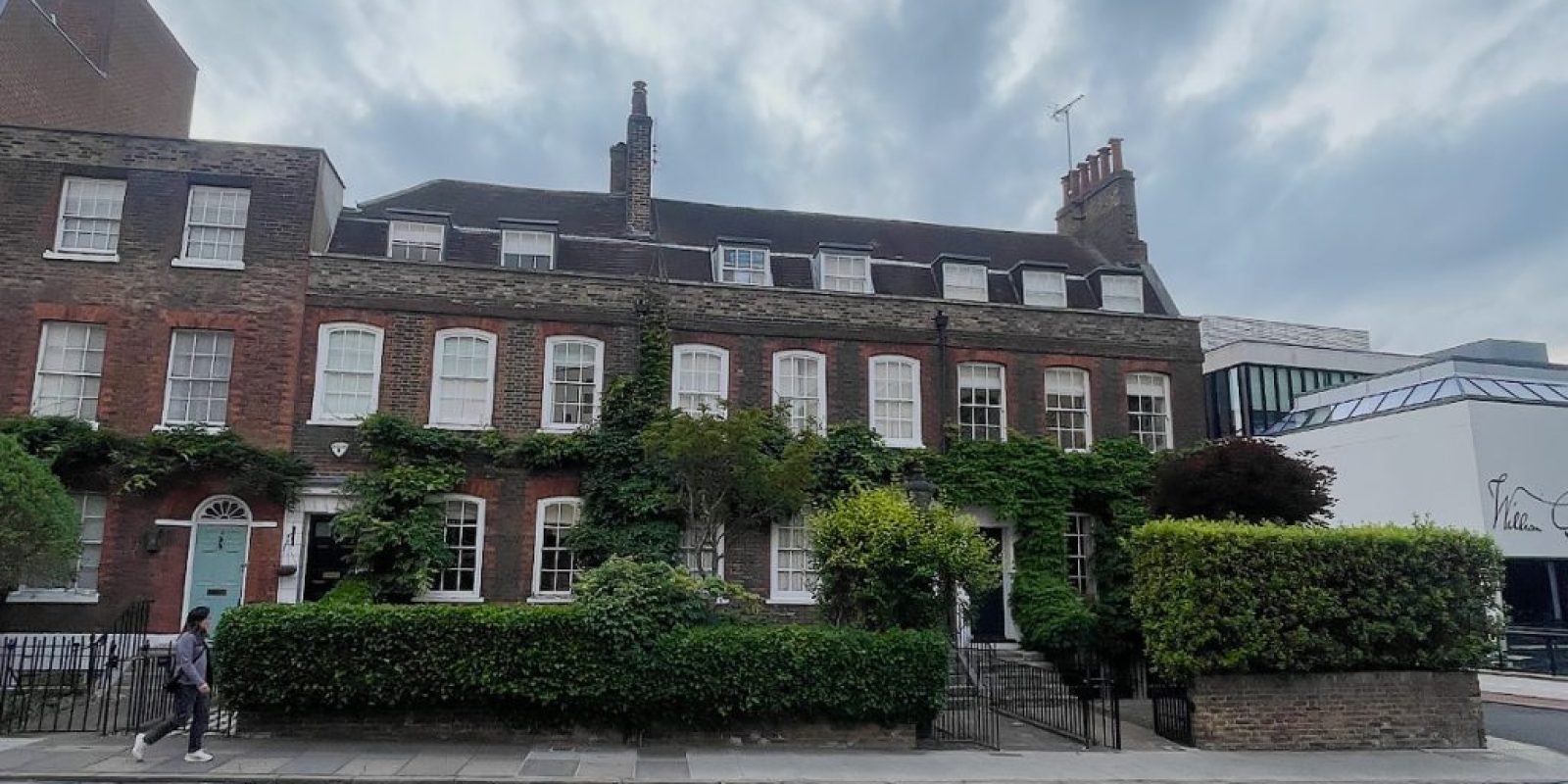
Today, No. 8 Parkshot is no more, having made way for a council building and later a courthouse, but next door, houses Nos. 4–6 still stand. Built around 1720, they would have been fashionable townhouses in their day, and still carry a quiet dignity. Richmond itself at that time was undergoing something of a cultural bloom. The railway had arrived in 1846, bringing well-heeled Londoners and, eventually, artists and writers.
Eliot would walk often, seeking inspiration in the misty bends of the Thames and the oak-fringed paths. She later wrote of “a delicate blue mist over the elms” and sunsets that turned the river into “a purple ocean.”
Mary had no natural children, but the couple supported Lewes’ three children from a previous marriage, and his ageing mother.
They moved from Richmond in February 1859. George continued to provide unwavering support to Mary, shielding her from criticism and boosting her confidence as a writer. He managed her finances, negotiated publishing contracts, and even hosted salons to promote her work. They lived together until Lewes’s death in 1878. Eliot later married John Cross, but she considered Lewes her true life partner and was buried next to him in Highgate cemetery.
Did You Know?
- George Eliot published under a male pen name to be taken seriously and to avoid gossip about her relationship with Lewes.
- She translated major German philosophical works before publishing her first novel.
- Her house, No. 8 Parkshot, was demolished in 1975. The neighbouring houses (Nos. 5–6) still stand and reflect their original design.
- Eliot’s literary fame began here – Scenes of Clerical Life and Adam Bede were both written during her Parkshot years.