Elizabeth I at Richmond Palace: The Queen, the River, and the End of an Era
Queen Elizabeth I was never one to let standards slip, least of all when residing at her beloved Richmond Palace. According to her early biographer, Edmund Bohan, the formidable monarch began her days in the palace diligently tending to state matters. Mornings were for paperwork; afternoons, more often than not, for power walks – either in the palace gardens or the enclosed galleries overlooking the tennis courts and manicured grounds. If the weather was grim (and it usually was), she had the long galleries to pace in her heeled slippers, thinking strategic thoughts. When feeling more sociable she would circle Richmond Green, surrounded accompanied by courtiers.
Elizabeth famously referred to Richmond as “that warm winter box to shelter my old age,” a welcome contrast to the draughty vastness of Whitehall or Greenwich. Her smaller apartments here made the palace not only cosier but also a more intimate stage for her court’s political theatre.
She wasn’t confined to the palace either. In finer weather, the Queen would rumble out in her gilded pumpkin-shaped carriage to nearby Mortlake, to visit none other than John Dee – royal astrologer, mathematician, mystic, and collector of esoteric books. Dee was a key advisor, not just for his planetary predictions but for his role as a military and diplomatic strategist. He even had Elizabeth’s ear during the Spanish Armada, proving that court wizardry could indeed be practical.
By the 1580s, Dee was off chasing the Philosopher’s Stone on the continent, but Richmond remained the Queen’s true spiritual home. She’d seen more than enough of life to crave a bit of warmth and quiet. As a child, she had survived the axe that fell on her mother, Anne Boleyn. As a teenager, she navigated the knife-edge politics of a religiously fractured realm. And now, as Queen, she had to outwit assassination plots with almost alarming regularity – including one in 1598 when a Spanish spy tried to poison the saddle of her horse while she was in residence at Richmond.
Despite the ever-present threats, Elizabeth flourished here. She hunted red deer in the Old Deer Park (then called her “Newe Parke of Richmonde”), rode with her beloved Robert Dudley, and hosted masques and feasts lit by torchlight and dripping in candied fruits. Shakespeare’s company performed for her and visiting dignitaries would fill on the available inns and lodgings nearby. Dudley, her childhood friend and favourite, was gifted a house in Kew (now the site of the Dutch House) and served as her Master of Horse. Rumours swirled of romance, fuelled further when Dudley’s wife died under suspicious circumstances.
When Dudley died in 1588, her affections shifted to Robert Devereux, the dashing and reckless Earl of Essex. But he lacked Dudley’s tact. After repeated failures in Ireland and an ill-advised rebellion, Elizabeth was forced to sign his death warrant in 1601. It’s said she never truly recovered from the betrayal.
Yet even in her later years, Elizabeth retained her regal composure. As late as 1602, a French ambassador marvelled at her spirited walks on Richmond Green, claiming her vigour belied her age. But the decline came swiftly. By the winter of 1603, the Queen, suffering from a cold and weariness, returned to Richmond for what would be her final days.
According to Venetian diplomat Scaramelli, who visited her weeks before her death, she still radiated power: “Her hair was of a light colour never made by nature, and she wore great pearls like pears round the forehead… she displayed a vast quantity of gems and pearls.”
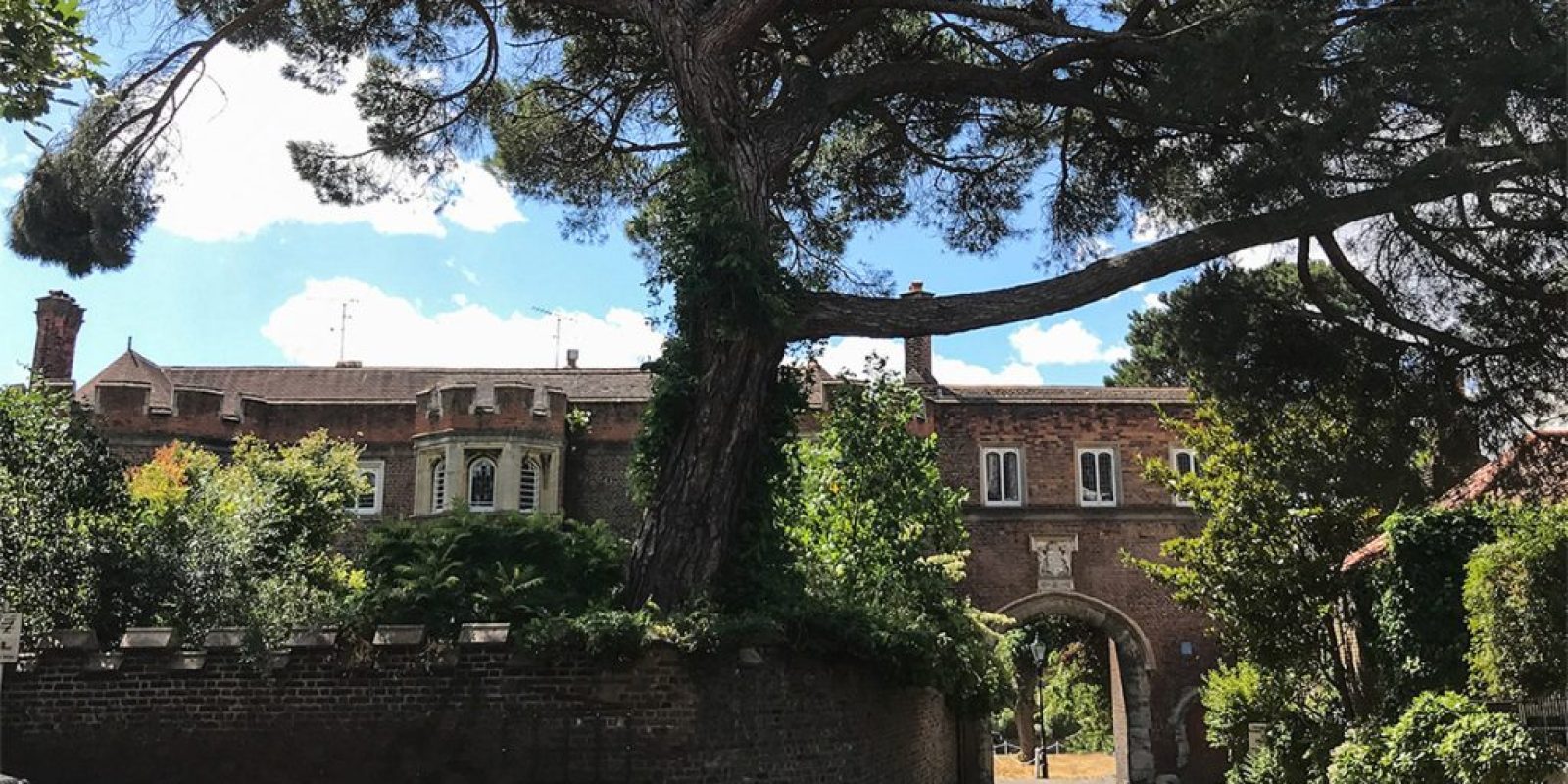
Legend says Elizabeth died in a room above Richmond Palace’s Gate House. Her ring, removed by a lady-in-waiting, was said to be tossed to a waiting messenger who galloped it to Scotland – proof for James VI that he was now James I of England. The truth is fuzzier, and the privy apparent was not located above the Gate House. With her passing, the Tudor era came to an end, and Richmond Palace began its slow decline.
Today, whilst only small parts survive, they are a beautiful reminder of all the intrigue, intellect, heartbreak and history that once unfolded on that very ground.
Did You Know?
- Richmond Palace was originally called Shene Palace, but after it burned down in 1497, Henry VII rebuilt it and renamed it after his own title — Earl of Richmond.
- Elizabeth I’s body was transported down the Thames by royal barge to Whitehall in a funeral procession so grand, it caused a full day’s river traffic jam.
- The Queen’s legendary final hours at Richmond Palace were marked by silence. She reportedly stood motionless for hours, fully dressed, refusing to lie down — as if defying death through sheer Tudor stubbornness.
- Shakespeare’s company regularly performed for Elizabeth – Possibly at least 3 times at Richmond He referred to her as “our gracious silvery queen” and his play The Merry Wives of Windsor was supposedly written at her command.
- All that remains of Richmond Palace today are the Gate House on Old Palace Yard and a scattering of walls tucked behind posh private homes. Blink and you’ll miss it — but the ghosts know where to look.