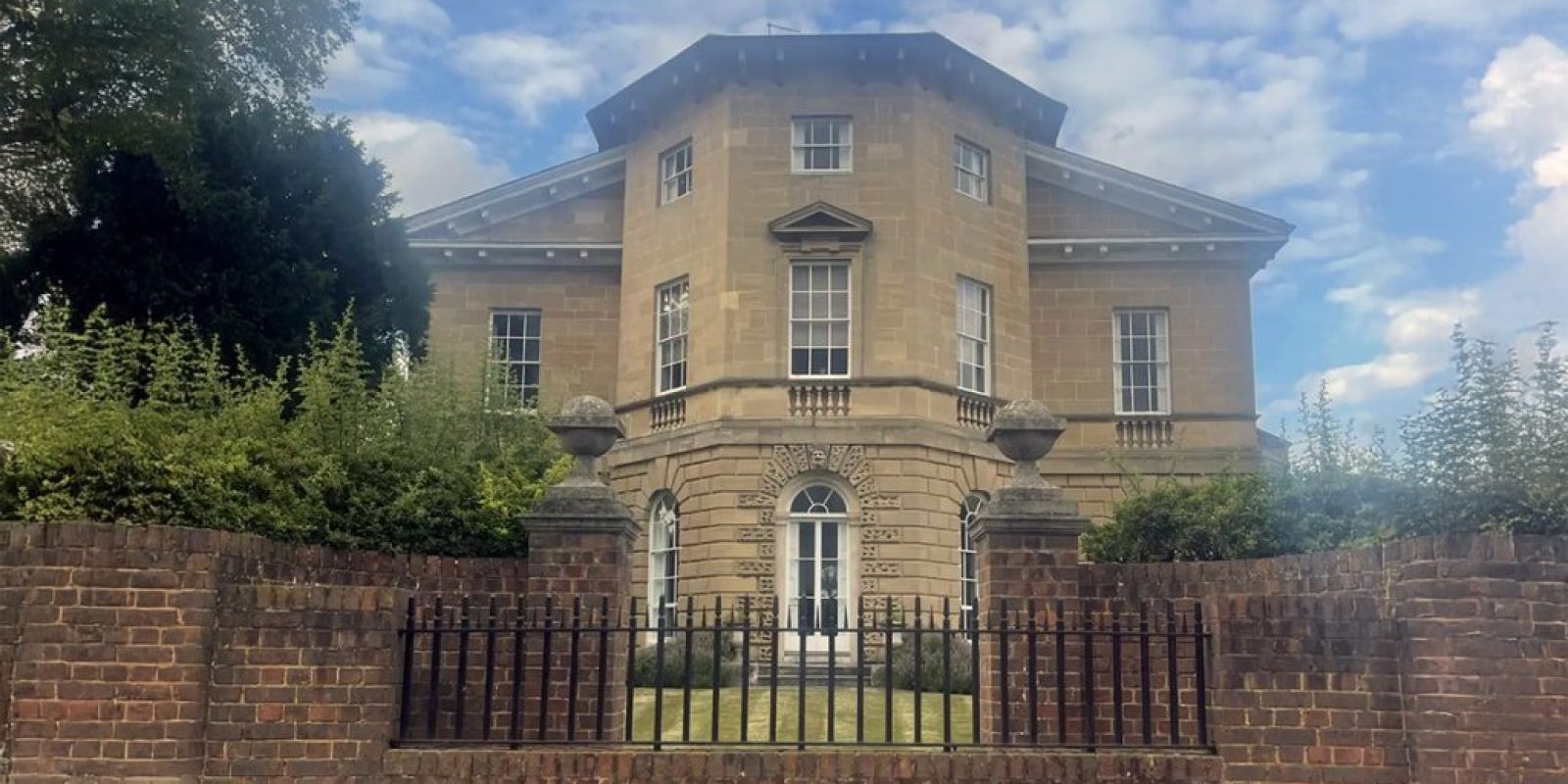
Asgill House, Richmond’s Riverside.
A Palladian Gem with a Transatlantic Footnote
Tucked along the Thames at the end of Old Palace Lane, Asgill House might seem like just another pretty Georgian villa — but its story, like many in Richmond, is layered with history, diplomacy, and more than a little drama.
Built in 1761, the same year its owner Sir Charles Asgill was appointed Lord Mayor of London, this graceful Palladian-style house stands on the site of the former Brewhouse of Richmond Palace. That palace — a favourite haunt of the Tudors — had long since been dismantled, its stones scattered and repurposed. But Asgill’s new residence gave the plot a second life, one defined more by banking ledgers than royal decrees.
A Banker’s Vision and a Rising Architect
Asgill wasn’t born into money. He made his fortune as a banker — a rising figure in the City of London who believed in turning coin into comfort. His country retreat, originally called Richmond Place, was designed by a then little-known architect named Robert Taylor, whose early career had begun in stone carving and sculpture. Taylor would go on to become the go-to architect for London’s elite, but Asgill House was one of his first architectural projects — and it shows his developing confidence in Palladian proportion and restraint.
With its symmetrical façades, delicate detailing, and river-facing garden, Asgill House epitomised mid-18th century ideals of leisure and refinement. It was meant to impress, but not overwhelm — a place where power dressed itself in calm classical lines.
The Asgill Affair: A Son, A War, A Near Miss
The story of Asgill House takes a striking turn during the American Revolutionary War, when Sir Charles’s only son, Captain Charles Asgill, found himself at the heart of an international diplomatic crisis.
Captured at Yorktown in 1781 while serving with the First Foot Guards, Asgill Junior was selected by lot in May 1782 to be executed in retaliation for the killing of American officer Captain Joshua Huddy by Loyalist forces. The retaliatory execution had been ordered by George Washington himself — an uncharacteristically grim move.
But young Charles’s mother, Sarah Theresa Asgill, wasn’t about to watch her son become a political sacrifice. Leveraging her connections to the French aristocracy, she made a direct appeal to the French foreign minister. The case reached Louis XVI and Marie Antoinette, and from there Washington came under pressure to reconsider. Eventually, Congress released Asgill, framing it as a diplomatic courtesy to the King of France. He returned to England in November 1782 — shaken, but spared.
Asgill House Today
After Sir Charles’s death in 1788, Asgill House passed through several hands. During the Victorian era, its exterior was altered — not always sympathetically. Fortunately, in the 20th century the house was restored to much of its original design, preserving Taylor’s architectural vision. Today, it’s a Grade I-listed building — an exemplar of domestic Palladian style and one of Richmond’s most elegant riverside landmarks.
Though privately owned, the house’s silhouette remains a familiar one for walkers on the Thames Path and history lovers who know to look twice. Behind the serenity of its classical columns lies a story of social ascent, architectural innovation, and one of the more curious footnotes of 18th-century diplomacy.
Did You Know?
- Asgill House stands on the site of the Brewhouse for Richmond Palace, once home to Elizabeth I.
- ir Charles Asgill made his fortune as a banker and was knighted before becoming Lord Mayor of London in 1761.
- Architect Robert Taylor also designed parts of the Bank of England and Mansion House in London.
- The Asgill Affair was one of the few times Washington’s authority was challenged by European diplomatic pressure — and he backed down.
- The house is now managed by the Crown Estate and has occasionally been used for royal functions and private events.