A Richmond Tart
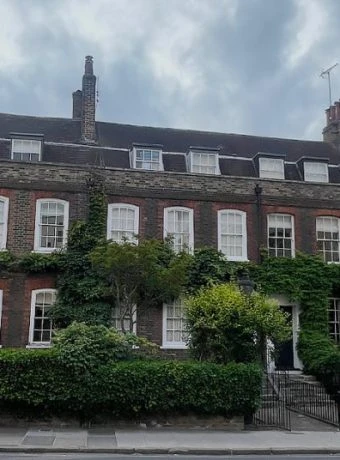
Like the Bakewell Tart or the Eccles Cake, Richmond has its own culinary claim to fame, though unlike its regional cousins, the Maids of Honour Tart doesn’t even take its name from the town. Instead, it hails from a rather grand row of Georgian houses, Maids of Honour Row, built to house Princess Caroline’s ladies-in-waiting in 1724. Imagine Bridgerton, but with better biscuits.
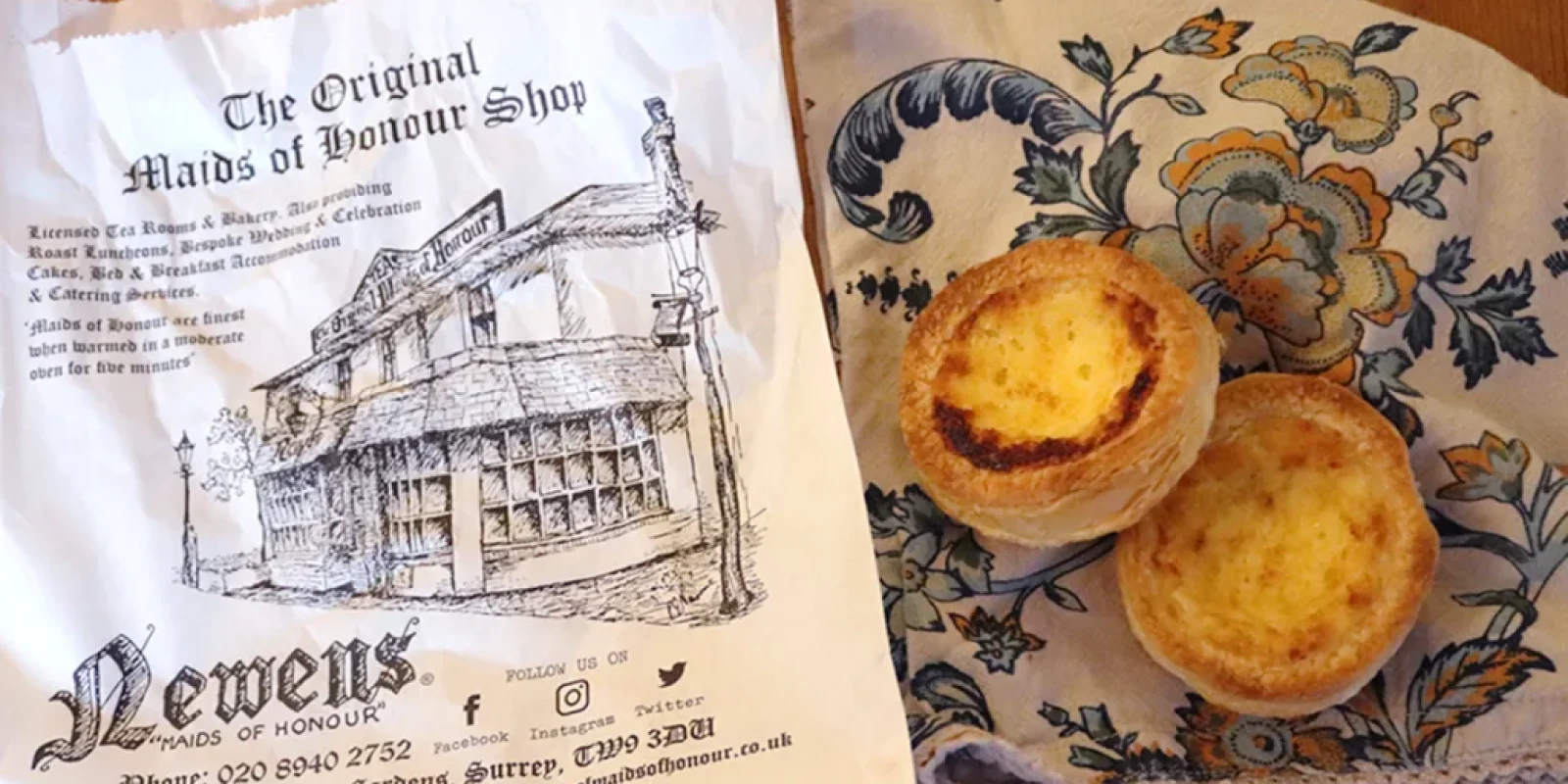
For over two and a half centuries, these flaky, feather-light pastries have been sold in Richmond, though today, you’ll only find the real deal at Newens Bakery, 288 Kew Road. Newens are the current keepers of the flame, or rather, the custard, and they’ve held the tart’s secret recipe in fierce, locked-box confidence since 1957.
A Tudor Temptation
The origin story? Like all the best food myths, it begins with Henry VIII. One version has the notoriously indulgent monarch stumbling across the tartlets being baked by one of Queen Catherine’s maids. Naturally, he devoured one, declared them divine, and promptly demanded the rest be made exclusively for his royal belly. At some point, the recipe was even rumoured to be locked away in an iron chest, which sounds dramatic, but then, this is Tudor England we’re talking about.
The first mere mortal to bake them for public sale was Thomas Burdekin, who opened a bakery on Hill Street in 1750. Quite how he got his hands on the recipe is anyone’s guess, perhaps a disgruntled ex-maid flogged it for a shilling, but by then, the Maids of Honour Row was the most fashionable address in town, and thats why that name stuck.
Wartime and Reinvention
In 1957, and the recipe, along with the name, was acquired by Robert Newens, who had served his apprenticeship at the original Hill Street bakery. By then, his family had been in the baking business for over a century. After the original shop was flattened in a WWII bombing raid, the current Newens building rose from the rubble around 1947 and has been serving up flaky nostalgia ever since.
But what do they actually taste like?
Think of them as a cross between a soufflé and a cloud, light puff pastry with a filling that hovers somewhere between sweet and savoury. There’s a hint of cheese, a whisper of lemon, and the kind of old-school subtlety that modern desserts, with their shouty flavours and triple-decker toppings, seem to have entirely forgotten.
Some compare them to Portugal’s Pastéis de Nata, but that’s a bit like saying Harrods is “just a shop.” Maids of Honour tarts are truly their own thing, delicate, elusive, and entirely addictive.
Certainly! Here’s a “Did You Know?” sidebar to accompany your blog or social post on the Maids of Honour tarts — crisp, informative, and lightly laced with charm:
Did You Know?
- The original Maids of Honour Row was built in 1724 to house Princess Caroline’s ladies-in-waiting — this was only a address in Richmond several hundred years after Henry VIII.
- King Henry VIII allegedly fell in love with the pastries after catching a maid sneak one from the royal kitchens. So enchanted was he that the recipe was said to be locked in an iron chest for safekeeping.
- he first public sale of the tarts was in 1750, at Thomas Burdekin’s bakery on Hill Street in Richmond. How he got the recipe remains a delicious mystery.
- Newens Bakery, the current and only producer of the “original” tarts, has guarded the secret recipe since 1957. Even the bakers don’t get the full list — just their bit.
- During World War II, the original bakery was destroyed in an air raid. The current Kew Road shop stands on post-war foundations — and still smells heavenly.
- The tart’s filling is lightly cheesy, delicately sweet, and famously impossible to replicate. Not quite a cake, not quite a custard