Virginia Woolf
“I feel so intensely the delights of shutting oneself up in a little world of one’s own, with pictures and music and everything beautiful.”
― Virginia Woolf, The Voyage Out
I’ve always identified with this quote from Virginia Woolf’s debut novel — completed in 1913 and published in 1915 — but today, those words take on a whole new resonance.
Virginia was, in the words of her husband Leonard Woolf, a genius — a rare blend of imagination and intellect. He called it “leaving the ground” when she’d describe the most ordinary experience with extraordinary vividness. She would go on to write at least twelve novels, including A Room of One’s Own and Mrs Dalloway, and help shape the literary modernism of the 20th century.
When The Voyage Out was finally published, Virginia was living in Richmond with Leonard. They had recently left Bloomsbury, the spiritual home of the artistic and intellectual set they were part of — the so-called Bloomsbury Group. The group included writers, artists, and philosophers who would gather, argue, and rewrite the cultural rulebook of the time.
Leonard, hoping the calmer pace of suburban life would help ease Virginia’s psychological strain, moved them to Richmond in 1915. It was a noble intention, but Virginia, a Londoner to her bones, bristled at the stifling quiet of the suburbs. She later wrote:
“This is my right; it is the right of every human being. I choose not the suffocating anaesthetic of the suburbs, but the violent jolt of the Capital, that is my choice… If it is a choice between Richmond and death, I choose death.”
Despite her despair, she eventually softened. She became active in Richmond’s civic life, running a branch of the Women’s Cooperative Guild — a progressive group offering political and educational support for working women, with more bite than the Women’s Institute.
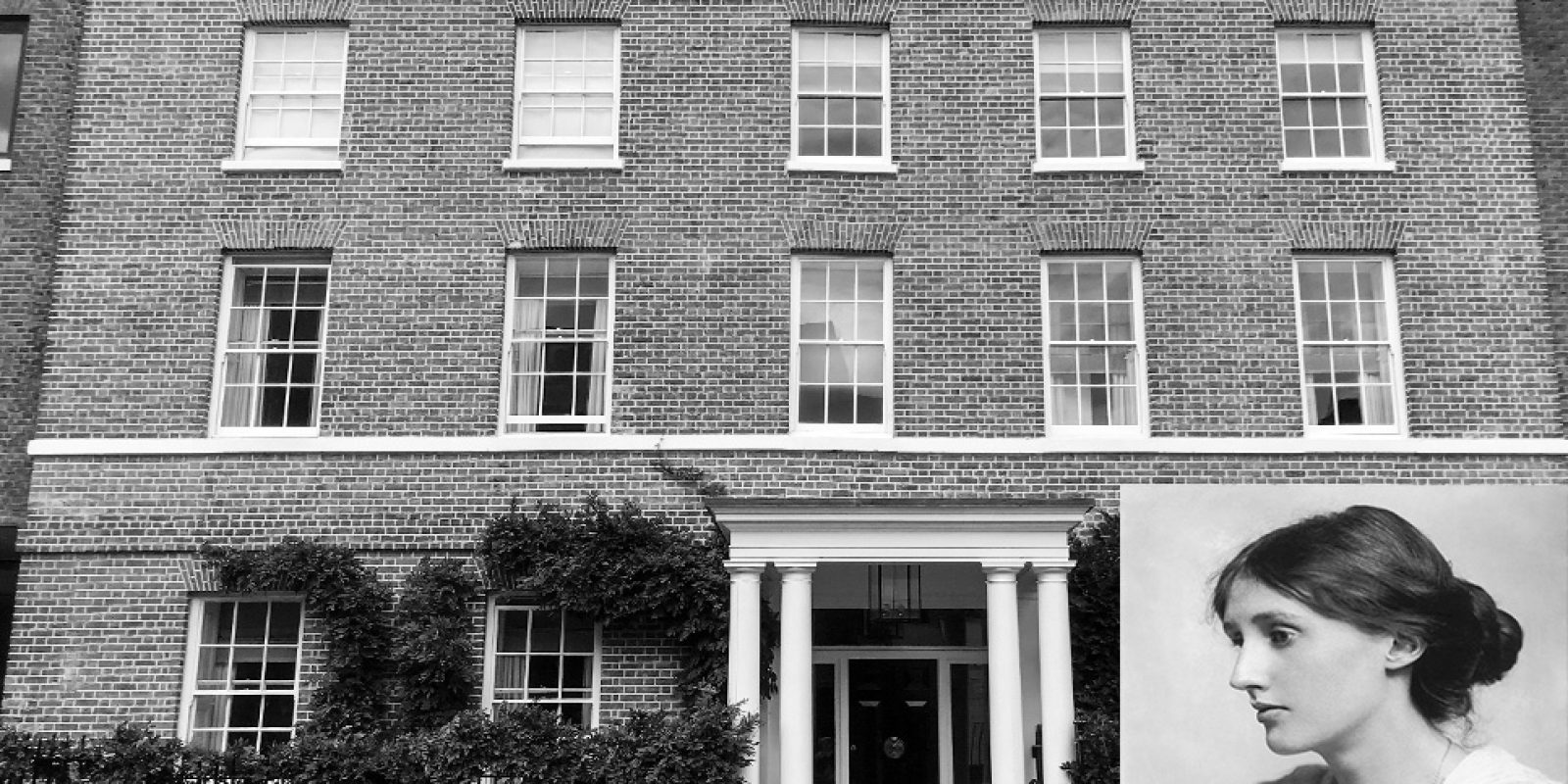
Virginia and Leonard lived at Hogarth House on Paradise Road. Keen amateur printers, they impulsively bought a printing press from Farringdon Road. With no dedicated space, they set it up on their dining table — and from that humble beginning, the Hogarth Press was born in 1917.
It went on to publish some of the century’s most vital voices — T.S. Eliot, Katherine Mansfield, E.M. Forster — as well as Virginia’s own work. The press’s success owed much to its independence, run from their home and free of outside influence.
Eventually, the Hogarth Press relocated with the Woolfs to their Sussex home. But in 1941, Virginia fell into a dark well of suffering she could not climb out of. She filled her pockets with stones and walked into the River Ouse.
Her final letter to Leonard is among the most moving ever written:
“I don’t think two people could have been happier than we have been. If anybody could have saved me it would have been you. Everything has gone from me but the certainty of your goodness. I can’t go on spoiling your life any longer.”
The loss of such a profound talent and an extraordinary mind is immeasurable. Yet it was that very mind — brilliant, sensitive, visionary — that also gave her such grief.
She once wrote in To the Lighthouse:
“It seems impossible that their calm should ever return or that we should ever compose from their fragments a perfect whole or read in the littered pieces the clear words of truth.”
For a deeper dive into these lines, one of my favourite blogs, BrainPickings (now The Marginalian), explores them beautifully: bit.ly/2S3MpJI
Did You Know?
- Virginia Woolf and her husband Leonard printed their first books on a press balanced on their dining room table in Richmond.
- Hogarth Press didn’t just publish Virginia’s own work — it introduced the world to major voices like T.S. Eliot and Katherine Mansfield.
- Despite her initial loathing for suburban life, Woolf eventually became an active and engaged member of Richmond’s community.
- Woolf’s Richmond years were some of her most productive — including the foundation of Hogarth Press and the early drafts of her major works.
- A blue plaque now marks Hogarth House, the Richmond home where modern literary history was quietly being typeset, proofed, and stitched together.